

Culture, Class, and Politics in Modern Appalachia
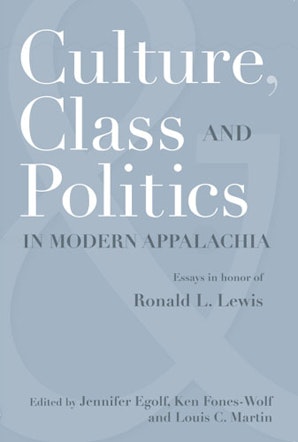
Essays in Honor of Ronald L. Lewis
West Virginia University Press
West Virginia University Press
WEST VIRGINIA & APPALACHIA
9781933202396
$28.99
Paperback
2009-03-23
2009-03-23
Culture, Class, and Politics in Modern Appalachia takes stock of the field of Appalachian studies as it explores issues still at the center of its scholarship: culture, industrialization, the labor movement, and twentieth-century economic and political failure and their social impact. A new generation of scholars continues the work of Appalachian studies’ pioneers, exploring the diversity and complexity of the region and its people. Labor migrations from around the world transformed the region during its critical period of economic growth. Collective struggles over occupational health and safety, the environment, equal rights, and civil rights challenged longstanding stereotypes. Investigations of political and economic power and the role of social actors and social movements in Appalachian history add to the foundational work that demonstrates a dynamic and diverse region.
6.000in x 9.000in x 0.900in
Weight data not found for this book.
"An excellent contribution to an understanding of modern developments in studies of Appalachia."
Arthur G. Neal, Journal of American Culture
"Readers come away with some fine specifics but also a real feel for the state of regional scholarship."
Appalachian Heritage
"Culture, Class, and Politics is a fitting tribute to Ronald Lewis’ lifetime of work. The articles are pertinent [and] frequently break new ground…"
Kenneth R. Bailey, West Virginia History
"The essays are well written and researched, are infused with historiography, and offer nuance, complexity, and pluralism to a region—not to mention a state—once seen as unitary and ripe for the ‘benefits’ of civilization."
Chad Berry, Journal of Southern History
384 Pages
Summary text
Contents text
Author Text
Reviews text
