

Famine in the Remaking
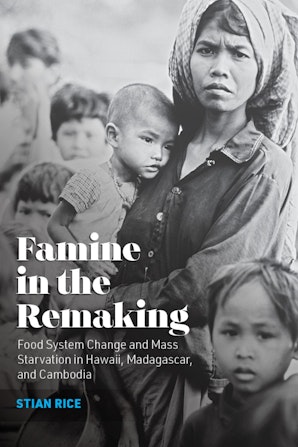
Food System Change and Mass Starvation in Hawaii, Madagascar, and Cambodia
West Virginia University Press
West Virginia University Press
Radical Natures
9781949199345
$29.99
Paperback
2020-02-27
2020-02-27
Mass starvation’s causes may seem simple and immediate: crop failure, poverty, outbreaks of violence, and poor governance. But famines are complex, and scholars cannot fully understand what causes…
Mass starvation’s causes may seem simple and immediate: crop failure, poverty, outbreaks of violence, and poor governance. But famines are complex, and scholars cannot fully understand what causes them unless they look at their numerous social and environmental precursors over long arcs of history and over long distances.
Famine in the Remaking examines the relationship between the reorganization of food systems and large-scale food crises through a comparative historical analysis of three famines: Hawaii in the 1820s, Madagascar in the 1920s, and Cambodia in the 1970s. This examination identifies the structural transformations—that is, changes to the relationships between producers and consumers—that make food systems more vulnerable to failure. Moving beyond the economic and political explanations for food crisis that have dominated the literature, Stian Rice emphasizes important socioecological interactions, developing a framework for crisis evolution that identifies two distinct temporal phases and five different types of causal mechanisms involved in food system failure. His framework contributes to current work in famine prevention and, animated by a commitment to social justice, offers the potential for early intervention in emerging food crises.
Famine in the Remaking examines the relationship between the reorganization of food systems and large-scale food crises through a comparative historical analysis of three famines: Hawaii in the 1820s, Madagascar in the 1920s, and Cambodia in the 1970s. This examination identifies the structural transformations—that is, changes to the relationships between producers and consumers—that make food systems more vulnerable to failure. Moving beyond the economic and political explanations for food crisis that have dominated the literature, Stian Rice emphasizes important socioecological interactions, developing a framework for crisis evolution that identifies two distinct temporal phases and five different types of causal mechanisms involved in food system failure. His framework contributes to current work in famine prevention and, animated by a commitment to social justice, offers the potential for early intervention in emerging food crises.
7.000in x 10.000in x 0.800in
Weight data not found for this book.
“Important and impressive scholarly work.”
Pritam Singh, University of Oxford
“An elegant and impassioned comparative account . . . At a moment when the specter of famine appears close, Stian Rice’s Famine in the Remaking is a compelling and welcome intervention into the origins of famine.”
Agricultural History
264 Pages
Summary text
Contents text
Author Text
Reviews text
